
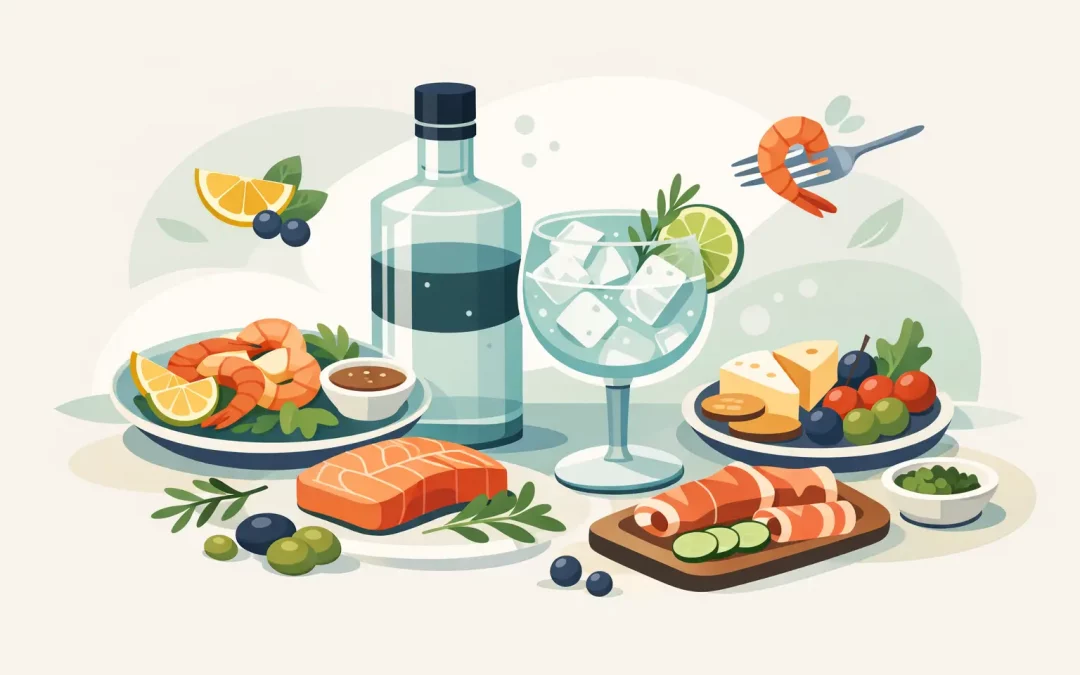
A cold gin and tonic can rescue an average afternoon, but the right plate beside it is what turns a quick drink into a proper occasion. If you’ve ever wondered what food pairs with gin, the short answer is this: clean, bright flavours usually win, but the best match depends on the style of gin in your glass and how the dish is cooked.
Gin is a flexible spirit because its flavour starts with juniper, then branches out into citrus, herbs, spice and florals depending on the bottle. That means it can work beautifully with food, but it can also clash if the pairing is too heavy, too sweet or too smoky. A good match should make both the drink and the dish taste sharper, fresher and more balanced.
What food pairs with gin depends on the gin itself
Not all gin tastes the same, so there is no single one-size-fits-all pairing. A classic London dry brings a crisp, piney edge that suits briny and savoury foods. A more citrus-forward gin feels brighter and often works well with lighter dishes. Floral gins can be lovely with delicate flavours, but they are easier to overpower. Spiced or contemporary gins can stand up to bolder plates, though they still tend to prefer freshness over richness.
That is why gin often feels more at home with starters, sharing plates and lighter mains than with very heavy comfort food. It is not that gin can’t handle richer dishes, but it usually needs some acidity, herbs or a sharp garnish in the food to keep everything in line.
Seafood is one of gin’s easiest wins
If you want a reliable answer to what food pairs with gin, seafood is usually near the top. The botanical, citrusy character of gin naturally lifts fish and shellfish without burying their flavour. Think oysters, grilled prawns, seared scallops or a simple piece of white fish with lemon and herbs.
The reason it works is fairly straightforward. Seafood often has a natural salinity and sweetness, while gin brings dryness and aromatic lift. Add a squeeze of lemon, a little dill, fennel or cucumber, and the pairing starts to feel effortless.
There are limits, though. A heavily battered fish dish or something with a thick creamy sauce can make gin taste a bit thin. If the plate is richer, a gin serve with more citrus or a slightly fuller tonic usually helps bring it back into balance.
Smoked salmon, gravadlax and cured fish
Cured fish is particularly good with gin because the drink mirrors the clean, aromatic feel of the dish. Juniper, citrus peel and fresh herbs all sit comfortably with salmon, trout or mackerel, especially when the plate includes pickled elements or a mustard dressing.
Light meat and herb-led dishes work well too
Chicken, turkey and pork can all pair well with gin, especially when they are cooked with restraint rather than loaded with heavy sauce. Roast chicken with thyme and lemon, grilled pork with apple, or a herby chicken salad all sit in that sweet spot where the food has enough savoury depth without overwhelming the drink.
Gin likes ingredients that echo its botanicals. Tarragon, rosemary, basil, coriander and mint can all help tie the pairing together. That does not mean every dish needs to taste like a garnish tray, but a thoughtful use of herbs often makes the whole thing feel more connected.
A very rich meat dish, on the other hand, is usually better with wine or a darker spirit. Steak with a peppercorn sauce, slow-cooked beef or heavily charred barbecue can make many gins seem too delicate. If gin is your first choice, go for a lighter cut or a fresher preparation.
Cheese can be excellent, if you choose the right style
People often default to wine with cheese, but gin deserves a place at the table too. Soft cheeses and goat’s cheese are especially good because they have a tangy brightness that suits gin’s crisp profile. A goat’s cheese tart, whipped feta, or a cheeseboard with fresh, creamy cheeses can work beautifully.
Hard, very mature cheeses are a little trickier. They can still pair nicely, but they need the right gin and usually something else on the plate, such as apple, grapes, chutney or a lightly pickled garnish. Blue cheese is more divisive. Some people love the contrast with a floral or citrus gin, while others find the combination too forceful. It depends on how punchy the cheese is and how confident the gin feels beside it.
Cheese boards and sharing plates
Gin is often at its best with relaxed food rather than formal pairings. A table of nibbles, charcuterie, olives, cheeses and bread gives the drink room to move. You are not forcing one perfect match. You are letting different bites bring out different notes in the glass.
Salads and vegetable dishes are better than many people expect
A good gin pairing does not need to centre on meat or fish. In fact, fresh vegetable dishes are often among the most natural partners because they share the same bright, garden-led flavour profile. Pea and mint, asparagus, cucumber, beetroot, fennel and citrus-dressed leaves all tend to sit nicely with gin.
This is where floral and cucumber-led gins come into their own. A salad with goat’s cheese and beetroot, a courgette dish with lemon, or charred greens with herbs can feel surprisingly complete alongside a well-made gin serve.
The main thing to watch is bitterness. Some bitter leaves or very assertive dressings can fight with the botanicals. A little acidity is helpful. Too much can turn the drink sharp.
Spicy food can work, but keep it balanced
Spice and gin are not enemies, but this is one of those pairings where it depends. Aromatic dishes with coriander, ginger, cardamom or citrus can be excellent with gin. Thai-inspired flavours, gently spiced curries or dishes with chilli and lime often bring out the brighter side of the spirit.
Very hot food is another matter. Too much chilli can flatten the botanicals and make the alcohol feel harsher. If the dish has real heat, a gin and tonic with plenty of ice, a generous wedge of citrus and a softer tonic can make it more refreshing.
Desserts are the hardest match
If you are asking what food pairs with gin at every stage of a meal, dessert is where the answer gets narrower. Dry gin rarely loves very sweet puddings. The sugar can make the drink taste austere or oddly medicinal.
That said, lighter desserts can work. Lemon posset, citrus tart, berry-led dishes or a pudding with herbs such as basil or thyme can be a decent fit, especially with a floral gin. Dark chocolate, sticky toffee pudding and anything very rich are usually less convincing.
A simple way to match gin with food
If you are choosing both the drink and the dish, start with the dominant note in the gin. If it tastes strongly of citrus, pair it with fish, salads or lighter chicken dishes with lemon and herbs. If it is more floral, think delicate plates, soft cheese or summer desserts with fruit. If it is spiced or savoury, you can push towards charcuterie, roast pork or more aromatic dishes.
Then think about weight. Light gin with light food is the safest route. Richer food needs something to cut through it, whether that is acidity, herbs or a fresher style of serve.
Finally, pay attention to the garnish. It is not just decoration. A slice of pink grapefruit, cucumber ribbon, rosemary sprig or wedge of lime can pull the pairing closer to the plate and make the whole thing feel considered rather than accidental.
What food pairs with gin for a relaxed meal out?
For a casual lunch, a gin and tonic alongside fish, a seasonal salad or a light chicken dish is hard to beat. For evening drinks, small plates often make more sense than one heavy main. Seafood, soft cheese, cured meats, olives and fresh, herb-led dishes all give gin space to shine.
That is one reason gin suits modern dining so well. It can be social, unfussy and still feel like a treat. If you are meeting friends for drinks, stretching lunch into the afternoon or settling in for dinner, it slots in naturally without needing everything to feel formal.
If you are ever in doubt, choose freshness over heaviness and look for flavours that echo the glass rather than compete with it. Gin does its best work when the food feels bright, balanced and easy to enjoy.