
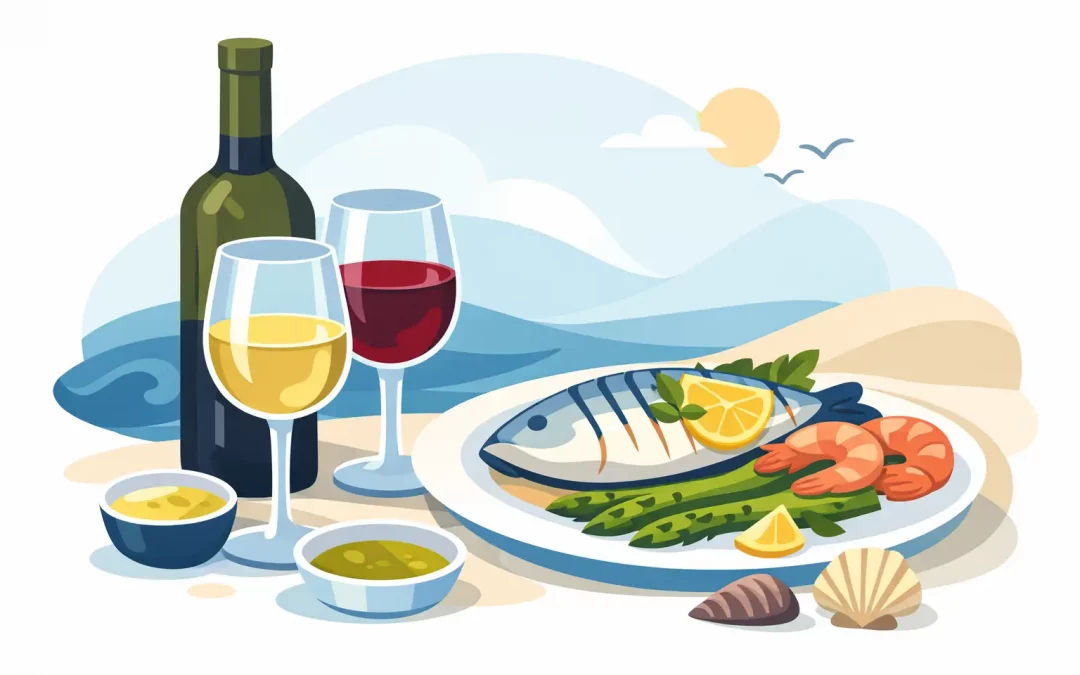
Order fish in a restaurant and the wine list can suddenly feel much longer than it did a minute ago. If you’ve ever paused over what wine goes with fish, the good news is that it’s usually simpler than people make it sound. The best match depends less on the fish alone and more on how it’s cooked, what it’s served with and whether you want the wine to freshen the dish up or add a bit more richness.
There is a reason the old advice points people towards white wine, but it is only a starting point. Fish can be delicate, rich, oily, smoky, grilled, creamy, spicy or fried, and each version asks for something slightly different in the glass. Get the balance right and both the food and the wine taste better. Get it wrong and one can flatten the other.
What wine goes with fish? Start with the cooking
If you remember one thing, make it this: pair the wine with the whole dish, not just the fillet. A flaky white fish in lemon butter wants a different wine from the same fish in batter with chips, and both are different again from a tomato-based seafood stew.
Lighter cooking methods such as steaming, poaching and grilling usually suit lighter, crisper wines. Richer sauces and fuller textures can handle wines with more body. That is why Sauvignon Blanc, Pinot Grigio and unoaked Chardonnay turn up so often with fish, but also why a light Pinot Noir or even a dry rosé can work in the right setting.
For white fish, keep things fresh
White fish such as cod, haddock, plaice and sea bass tend to be mild and delicate, so they are happiest with wines that will not overpower them. Crisp, dry whites are the safest place to start. Think Pinot Grigio for something clean and light, Sauvignon Blanc for a bit more zip, or Picpoul if you want sharp freshness that cuts through the dish neatly.
If the fish is simply grilled with herbs and lemon, these styles usually do the job beautifully. They keep the plate feeling bright and let the fish stay at the centre of things.
If the dish includes a creamy sauce, the rules shift slightly. A rounder white, such as Chardonnay, can work better because it has enough texture to sit comfortably alongside the sauce. Unoaked or lightly oaked styles are often the sweet spot, giving enough body without making the pairing feel heavy.
For oily fish, choose wines with more structure
Salmon, trout, mackerel and sardines have a richer texture and stronger flavour than lean white fish. That means they can carry more assertive wines. Crisp whites still work, especially if the dish is served with citrus or herbs, but this is where fuller whites and some lighter reds come into play.
Salmon is a particularly flexible option. A fresh Chardonnay, a dry rosé or a light Pinot Noir can all work, depending on the preparation. If it is grilled or roasted, Pinot Noir can be surprisingly good because its gentle red fruit and soft tannins do not swamp the fish. If it comes with a creamy sauce, Chardonnay is often the better call.
Smoked fish is another category worth treating separately. Smokiness and salt need freshness, so wines with good acidity are useful here. Sauvignon Blanc, Riesling and sparkling wine all make sense, especially if the dish is on the lighter side.
What wine goes with fish and chips?
This is where traditional rules get a little more relaxed. Fish and chips is crisp, salty, comforting and often served with tartare sauce, mushy peas or a squeeze of lemon. You need a wine with enough acidity to lift the batter and enough character not to disappear next to the chips.
A zesty white such as Sauvignon Blanc works well, as does a dry sparkling wine if you want something that feels a touch more celebratory. The bubbles cut through fried food brilliantly. A dry English sparkling wine can be particularly good with classic British fish and chips – fresh, clean and lively without feeling fussy.
If you prefer still wine, Picpoul or Albariño are both reliable choices. They have the citrusy edge that fried fish loves and keep the meal from feeling too rich.
Tomato, spice and bold flavours change the pairing
Not every fish dish is subtle. Add tomato, chilli, garlic or Mediterranean-style seasoning and you need to rethink the wine. Sharp tomato sauces can make soft wines taste flat, while spice can make alcohol feel hotter.
For fish in a tomato-based sauce, rosé often works better than a very delicate white. It has enough fruit to cope with the acidity of the tomatoes while staying fresh. Light reds can also be useful here, provided they are low in tannin. Pinot Noir is often the easiest red to match with fish for exactly this reason.
For lightly spiced fish dishes, aromatic whites tend to be the friendliest option. Riesling, Gewürztraminer or an off-dry style can take the edge off spice and stop the pairing becoming harsh. Bone-dry, high-alcohol wines can feel a bit aggressive with chilli, so this is one of those moments where a little softness is actually helpful.
A few dependable pairings for popular fish dishes
If you want the quick version, there are some combinations that are consistently easy to enjoy. Cod or haddock with lemon and herbs pairs well with Sauvignon Blanc or Pinot Grigio. Sea bass or plaice likes Picpoul, Albariño or a dry Vermentino. Salmon works with Chardonnay, rosé or Pinot Noir. Tuna, especially when seared, can handle a light red. Shellfish often suits Muscadet, Chablis or sparkling wine.
That said, there is always a little room for taste. Some people prefer a very crisp, mineral white with nearly everything from the sea. Others like softer, fruitier wines because they feel more generous at the table. Neither camp is wrong. A pairing should make you want another bite and another sip, not pass an exam.
Don’t forget the sauce
Sauce is often the deciding factor. Butter sauces usually welcome Chardonnay or other fuller-bodied whites. Creamy sauces need similar generosity. Herb-led or citrus sauces lean towards sharper whites. Tomato-based sauces can cope with rosé and light reds. Asian-inspired glazes with sweetness or spice may be better with aromatic whites than standard dry whites.
This matters because the sauce often lingers on the palate longer than the fish itself. If you match the fish but ignore the sauce, the pairing can feel slightly off even when the logic seems sound.
Can you drink red wine with fish?
Yes, sometimes, and it is not nearly as controversial as it used to sound. The old warning comes from tannin. Big, tannic reds can react badly with fish oils and leave a metallic taste, which is why a hefty Cabernet Sauvignon with delicate fish is usually a poor idea.
But lighter reds are different. Pinot Noir, Gamay and some chilled reds with low tannin can work very well with meaty or oily fish, especially tuna and salmon. The key is to keep the red fresh, light and not too oaky.
If you enjoy red wine and do not want to switch just because fish is on the menu, look for a style that is elegant rather than powerful. That usually gives you the best chance of a pairing that still feels balanced.
Sparkling wine is often the safe bet
If you are stuck, sparkling wine is one of the easiest answers to what wine goes with fish. It has acidity, freshness and texture, which means it can handle a surprising range of dishes from oysters and smoked salmon to fried fish and richer sauces.
It also has the advantage of feeling versatile across a meal. If one person orders shellfish and another goes for salmon, a good sparkling wine can keep everyone happy without overcomplicating things.
The easiest way to choose with confidence
When in doubt, think about weight and freshness. Light dish, light wine. Richer dish, fuller wine. Fried food needs acidity. Spice likes a bit of aromatics or softness. Tomato needs fruit and balance. Smoky flavours need brightness.
That simple approach gets you a long way. It also makes choosing wine feel much more relaxed, whether you are out for dinner, planning a weekend meal or sitting down to something special at Mallories.
If you are ever torn between two bottles, go for the one that sounds fresher and more food-friendly. Fish rarely wants a wine that shouts. It usually wants one that keeps the plate lively, lets the flavours breathe and makes the next mouthful even better.